To the Finish Line!

Our last couple of weeks!

Thanks to Jules for completing our presentation series with a thoughtful engagement of Bi, Butch, and Bar Dyke: Pedagogical Performances of Class, Gender, and Sexuality by Michelle Gibson, Matha Marinara, and Deborah Meem. “We must think seriously about identities we bring with us into the classroom, remain conscious of the way those identities interact with the identities our students bring, and insert ourselves fully into the shifting relationships between ourselves and our students at the same time that we resist the impulse to control those relationships.” 

With this reading, we further explored the role that voice plays in writing – specifically that it is connected to both embodiment and subjectivity.  (Voices via bodies are metaphors – marked and read in particular ways, bearing the sway of power and politics.)  Thinking about the link between voice & identity, and the yearning/reach for authenticity and “true self” -We have covered much ground regarding the important link between vulnerability, voice, and empowerment.  If vulnerability is an important seed for authentic learning, then it is the writing process (and finding a voice within that process) that serves as a middle ground to help steady us on our own terms as we continue on a  somewhat risky journey.  We also spoke a bit about the potent potential of silence in a pedagogical context (who should come out, in what context and why??).  Perhaps not talking (to wait and listen, to be willing to let the silence hang in the air) has generative power.  Perhaps ironically, silence can be an important way to learn to communicate.

Our class agenda:

Your Final Project plans!

We conducted Class Workshop #3 to settle your shared design vision for your collective final project. I think you are really progressing and working together efficiently. This week, , before our next class, everyone has agreed to finish their own individual remix story, and also write their own three sentence author bio. It seems that you will all write an introduction to your collection which highlights the remix concept for writing – you will co-write this statement together in class next Tuesday evening. In addition, you will work with each other to complete your mood boards (so it might be prudent to collect some artifacts that might work for you in constructing your princess mood board). 

You have also set up 3 teams to divide and conquer the overall tasks:

  • Theresa & Kerri will take on the overall organizational helm as “site managers” or project directors. They will create the project shell for all of you to work on together.
  • Ricki & Jules will be at the helm of the group effort to write the Introduction or Project Description (the Remix statement). They will also be in charge of making sure the Author Bio page is complete.
  • Gianna & Giselle will work together on creating the cover page (the visual-design “entry point”) which will be created in Thingthink. 
  • All of you will serve as copyeditors for each other.

Here again is the list of your remix story selections:

  1. Kerri:  Belle
  2. Theresa:  Ariel
  3. Ricki:  Pocahontas
  4. Jules:  Sleeping Beauty
  5. Gianna:  Rapunzel
  6. Giselle:  Alice

Your to-do list:

Your final blog is a Progress Report on your ongoing project work.

Remember that next week (12/13) is our final gathering and it will be a “Potluck” Working Session. We will celebrate the close of the semester together.  So bring something tasty to eat!

**Remember that your Self-Assessment & Class Portfolios are due on December 20th via email.

December!

Thanks Ricki for walking us through some key reading selections from “Bad Ideas About Writing”. The focus on writing pedagogy (or rather, the lack of its prioritization and/or prominence in different educational contexts) is an important gap to apprehend. Although we have touched upon this “gap” many times throughout the course, these readings in particular shed light on a variety of systemic oversights, making us see the many angles which add up to writing pedagogy getting such short shrift in the American education system. Lack of teacher training and preparation, lack of clear standards for “college ready writing”, lack of coordination or simple communication between secondary school contexts and higher ed contexts, and lack of support for teachers overall (at all educational stages). The fact that many of you, as teachers, have taught yourselves how to teach writing, says much about this profound gap. So much is assumed or taken for granted under the general label of “English” or “Language Arts”. (i.e. Someone who is trained in literature is automatically prepared to teach writing !???!!). It is as if our classrooms are merely “testing grounds” for what may or may not work – in a context with little to motivate teachers to solve this difficulty, other than the high stakes testing forced upon their students. Despite lack of support and general inconsistency amongst educational institutions, individual teachers have still managed to incorporate effective strategies, and open up their students’ writing potential. But so much of how we learn to write is a hit-or-miss proposition, depending on the particular teacher we have been assigned any given year.

Our class agenda slides:

Your final project progress:

I am really pleased with how much was accomplished in Workshop #2. You have envisioned a unique final group project – one that centers the power of remix as a writing strategy. Your project will be a “Princess Redux” collection, pointing the way to new forms of self-understanding and self-empowerment. Potential social issues that might emerge in your individual remix narratives might include: mental health, social justice, equity, inclusion, heteronormativity, poverty, discrimination, materialism. Your “Princess Remix Collection” will most certainly highlight revisionary thinking, and the ways remix can lead us to imagine a better world. Voice & identity seems to me to be the common thread – through new forms of “voice” one can center authentic empowerment (on one’s own terms). Your “Final Project” workshop document represents your progress thus far. We will continue to use this document as a place to work through your collective ideas as you move forward with key decisions.

You to-do list for next week:

Next week we will hear from Jules first, and in the second half of class we will proceed with “Workshop #3, focusing on your overall project design and implementation strategy.

Read Jules’s selection: Bi, Butch, and Bar Dyke: Pedagogical Performances of Class, Gender, and Sexuality by Michelle Gibson, Matha Marinara, and Deborah Meem.

Blog #11 Due – Write a blog reflection on Jules’ reading selection. In addition, write a rough draft of your Princess Remix story, and include in your blog this week a quick update on your Princess story, along glimpse of concepts for your “mood-board” profile for your Princess.

For after the break…

Happy Thanksgiving!

Thanks for a great prelude to Thanksgiving Break. I enjoy our time together (whether on the screen or in person) and I am proud of the connections and sense of community we have gained over our time together thus far. Thanks to Giselle for a thoughtful engagement with the seminal work of Paulo Freire. I am glad we made this stop on our reading roster, as his ideas are so formative to any discussion of equity in education.

“The oppressed, instead of striving for liberation, tend themselves to become oppressors.” 

We took the moment to consider education as a practice of freedom versus education as a practice of domination.  Paulo Freire is one of the most important critical educators of the twentieth century, and he is considered one of the founders of “critical pedagogy”. He envisions an approach to education that aims to transform oppressive structures by engaging people who have been marginalized and dehumanized and drawing on what they already know.  “Education either functions as an instrument which is used to facilitate integration of the younger generation into the logic of the present system and bring about conformity or it becomes the practice of freedom, the means by which men and women deal critically and creatively with reality and discover how to participate in the transformation of their world.”  Giselle presented the material from his first chapter with an eye towards our own teaching and learning experiences.  How can we imagine a pathway to freedom when confronted with the profound complicity of an educational system that perpetuates the oppressive elements of society itself?  Freire believes that part of the purpose of education is to help children develop the ability “to ask good questions.” Teachers are at the frontlines of this struggle to open up a critical eye to the world, guiding new generations to think in complex and dynamic ways in response to a world foreclosed.  It is through this ability to think critically that education can help guide us in our journey towards liberation and freedom.

Jump starting your Final Group Project

The final group project is purposely left open for your collective determination.  We began the process of identifying a plan for this project with in-class workshopping. And we will continue the work through writing reflections, in-class negotiations, and by building up to a consensus about what matters most to all of you as a small group.  

Some key dates for the remainder of the class: 

11/22: Workshop #1 (second half of class)

11/29: Workshop #2 (second half of class)

12/6: Workshop #3 (second half of class)

12/13 Workshop #4 (the entire class period)

12/20: NO CLASS. Submission deadline for the group project and the completion our ENG 5020 work – Self-Assessment & Class Portfolios

Enjoy friends, family, and food.

Your to-do list for 11/29:

Read for next week Ricki’s selection: Bad Ideas About Writing – edited by Cheryl Ball and Drew Lowe (pgs. 333-364)

Blog #10 Due: A reflection post on Ricki’s reading selection above. In addition, please include your early thoughts on the Group Project – what specific ideas are emerging for you? Be specific as possible.

Towards Thanksgiving

Thanks to Kerri for kicking off our double presentation session, and for her thoughtful consideration of the constraints teacher’s face in the current educational climate.

We touched upon the classic Teaching Writing as Process Not Product by Donald Murray.  It was written nearly 50 years ago (can you believe it?) and yet, these ideas still seem to be fresh in certain educational contexts (…which in and of itself is kind of depressing if you ask me). Murray emphasizes writing as “the experience of discovering through language”, and he implores his readers to consider teaching unfinished writing instead of finished writing.  The “unfinishedness” should be embraced, and in order to get there with our students, we should be prepared to shut up and let our students realize this on their own terms while respecting the potential of their own truths and their emerging voice. 

When it comes to writing pedagogy, Wiley ultimately points out the pros and cons of the formulaic nature of Schaffer’s pedagogy (the multi-paragraph essay).  It was interesting to read all of your blog posts because you had very strong feelings about this writing approach. The formula approach is indeed where much creativity gets thwarted.

Perhaps teachers should use the formula approach as a “strategy”, but not a “formula” per se.   “To develop as writers, students must develop a repertoire of strategies for dealing effectively with various writing tasks presented to them in different situations. They must also learn to make choices about genre, content, structure, organization, and style; and they must learn to hone their judgments about the effects of the choices they make as writers.”  It would be preferable if teachers (and school districts) build out “formula” strategies for students (to help some gain confidence), but from there, perhaps they should also decide what more there is to do, once students have a framework for the multi-paragraph academic essay.   And as we discussed, the Schaeffer method won’t work in all contexts/situations, and it shouldn’t.  The method can be deeply discouraging/dismissive to the inherent creativity that some students are blessed with. Once students have learned this strategy (or concurrently as they are learning it) they should also move forward, outward, and onward to genres, audience, critical thinking, and exploration of their own writing.  Think of bike riding – the formula-approach is like training wheels that can eventually come off.  Sometimes this kind of “formula approach” really works in onboarding reluctant writers, giving them just enough confidence to get them “in the game”.  And that is a remarkable outcome, in and of itself. Thanks to Kerri for opening up our thoughts to new assignments and strategies. Those “dream” assignments might link student writing to their creativity and to a personal (self-determined) sense of purpose.

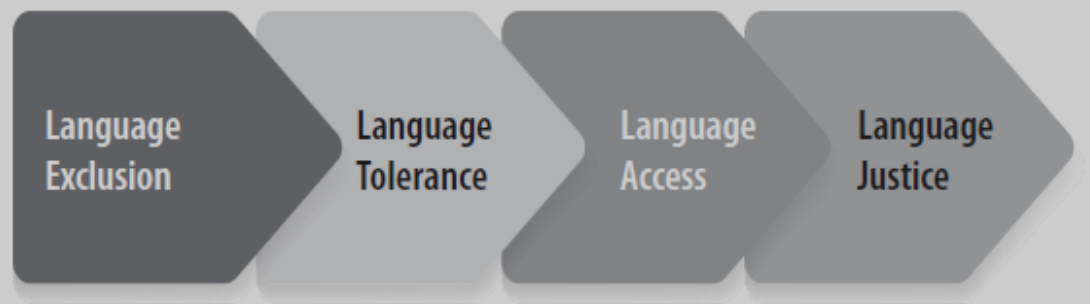
It was perfect to segue from thoughts on “constraints” and writing formula into the readings Theresa chose for us. They shift our focus to ideas like -empowerment, -voice, and -justice. The contrasting concerns in these two selections are a telling juncture for us, when thinking about writing theory and writing practice..

“Writing is my passion. It is a way to experience the ecstatic. The root understanding of the word ecstasy — “to stand outside” — comes to me in those moments when I am immersed so deeply in the act of thinking and writing that everything else, even flesh, falls away.” -bell hooks

hooks understands writing as a pathway to freedom, and her work on love and equity in the classroom is a critical lens for us, as we build together an understanding of what writing can do for people. Writing is a site of liberation, and yet it can also be a site for containment and compliance. And so the ground we stand on as writing pedagogues is significant, influential, and truly important to our collective future. Moving from bell hooks who centers the importance of voice in self empowerment, to April Baker-Bell’s crucial lens into linguistic violence in schools, we can see the urgent crossroads of language and literacy education – and writing studies in the here and now. Her work reflects on the urgent need for antiracist language pedagogies in our current social and political climate. I especially enjoyed Theresa’s final exercise of design intentions for more equitable classrooms. It was just a small start, but it is indeed the right direction to take our overall conversation. What do we do to open up the world for all voices and perspectives? What does that look like in the spaces we share together?

Your to-do list for 11/22?

–Read for next week Giselle’s selection:  Pedagogy of the Oppressed, by Paulo Freire (Chapter 1)

Blog #9 Due before – Reflection blog post on Giselle’s reading selection

Quick interim post for the week of 10/25-11/1:

Agenda from 10/25:

Your to-do list for the week before 11/1:

Read Kerri’s selections for next week :

Wiley, Mark. “The Popularity of Formulaic Writing (And Why We Need to Resist).” The English Journal. 90.1 (2000), 61-67.

Teaching Writing as Process Not Product by Donald Murray

Blog #7 Due before 11/1 – a reflection blog on Kerry’s reading selections

What is coming up for week of 11/1 – 11/8:

Please read Theresa’s selections:

hooks, bell. Teaching to transgress: education as the practice of freedom. London: Routledge, 1994. (Chapter 3)

April Baker-Bell, We Been Knowin: Toward an Antiracist Language & Literacy Education (Journal of Language & Literacy Education)

Blog #8 Due before 11/8  Reflection blog post due on Theresa’s reading selections 

Kerri & Theresa will both present on November 8th. This class will be our only double header, with much content to cover together. Looking forward to it!

Voice & Equity

We spoke this week about the importance of voice, and we also alluded to the quest for equity in education.  I and grateful for the chance to think together about why the concept of voice is at once elusive but also so critical when thinking about writing.  It was an important moment for all of us to have the chance to discuss what makes up a “voice” as the writer develops.  “Voice” is framed by Elbow as a rhetorical tool – a writing skill that needs to be considered (applied or withheld) depending on the writing context.  Is the goal of teaching writing to develop the self by honing voice?  Or is voice a misleading metaphor?  Perhaps we do not really write, …for we are ultimately written by culture?  When facing these tensions around the concept of voice in writing, Elbow points out the problem of either/or thinking which often leads to a “compromise” mandate. (And compromise often becomes a problematic way of understanding the complexity of perspective.  The result is often a watered-down middle-of-the-road take away).  Elbow thoughtfully favors both/and thinking.  Thinking that might instead include two opposing perspectives in relief, standing side by side for us to apprehend in stark contrast, in order for us to gather a more profound understanding of why there might be such distinct/disparate perspectives.  (With our current political-rhetorical landscape in mind, what a timely reflection to have at this point, no?).  ….So what does a deeper dive into modes of thinking have to do with the construction of voice in writing?  The voice-as-self verses the voice-as-role debate illuminates that “voice” is indeed the perfect lens or metaphor for language as both material and historical.  It is interesting to note that Elbow always defines voice from an auditory/aural perspective.  This prompts us to think further about the embodiment of language.  For we know things in our bodies.  How do we give that kind of knowledge “voice”….in writing? …and in our lives?  What other ways can we claim “voice” (….other then through the polished act of writing text)?

Your to-do list:

-Garcia, A. (2016). How Remix Culture Informs Student Writing and Creativity. School Library Journal. Retrieved at https://www.slj.com/?detailStory=how-remix-culture-informs-student-writing-creativity

-Brannon, Lil and C.H. Knoblauch. “On Students’ Rights to Their Own Texts: A Model of Teacher Response.” College Composition and Communication. 33.2 (1982), 157-166.

Blog #6 Due before 10/25 – a reflection blog on Gianna’s reading selections and please share your #whyiwrite poem or your #iamfrom

Independent Work Week

Feedback on Student Writing


Last week we considered Feedback for Writing inspired by Bean & Elbow.  We spoke about the shifting perspective involved in being a student and receiving a paper back, verses being a teacher who faces a voluminous stack of papers to evaluate.  We also spoke about the constraints of time. Somewhere in between student vs. teacher perspective lies a real need to develop an effective practice – which honors both the developing writer, while still keeping in mind the reality of a teacher’s time constraints.  We spoke about the dynamic of care, and how hard it is to give care in professional contexts (teaching), especially if one is not receiving care, and how little evidence there is of an education system that careful (i.e. care-full).  I think our discussion drew to light a deeper  understanding of the looming backdrop of the real constraints that teachers face in terms of meeting specific assessments, standardized tests, and district administrative expectations.  From the beginning, our bridge from writing theory to real life (on-the-ground) practice reveals significant challenges and conundrums.

Bean articulates how easy it is, as a teacher, to forget that there is a person behind each essay that is being read (sometimes ripped apart for errors) and graded. It’s also easy to forget that strong feeling of vulnerability which accompanies allowing someone to read your work—especially if that person is in a position to judge you.  We considered how much room there is for misunderstanding and misinterpretation between the writer and the writing instructor during feedback.  Bean advises teachers to be more mindful of the comments that they write on students’ papers because the worst comments can insult and even dehumanize a student.

Elbow helped us see the way evaluation methods shape student perspectives. It is critical to apprehend that foundational vulnerability that lies at the heart of learning how to write.  And I also think it is important for all of us to tap into our own memories of teacher feedback in order to gain that empathetic perspective.  The key consideration that emerged was the subtle issue of power that informs teaching and learning contexts.  When one has a position of authority/power, it is important to recognize the significant responsibility in that position.  Unfortunately in the haste to do one’s job as teacher, sometimes these truths are forgotten or disregarded.  But the responsibility that comes with authority should remain front and center in order to maintain a mindful approach to designing an effective learning environment.  This is a lot for a teacher to navigate (when there is little supporting them in terms of systemic expectation).  

By reviewing these articles carefully, it seems the challenge in responding to student writing becomes more nuanced and complex, and yet, there isn’t a crystal clear pathway to ensure an overall improved strategy.  As we continue to bridge theory to practice together, let us attempt to identify some ways (small moves that matter??) to encourage and foster writing in education (and society).

The Danger of a Single Story

Your to-do list:

For October 11 (Independent Work; NO MEETING):

Blog #4 due before 10/11 -Reflection blog post on “The Danger of the Single Story” TED talk (What does this TED talk have to do with our study of writing theory and writing practice?)

For October 18 Class in our Zoom Room:

Read: Voice in Writing Again: Embracing Contraries by Peter Elbow; Blog #5 -Reflection blog post on “Elbow’s “Voice in Writing Again”

Apprehending the power of rhetoric

I think it is safe to say we are now officially gaining some “learning momentum” since yesterday was our third class together in “Writing Theory & Practice” – the foundation course for your MA in Writing Studies degree.  Your blog posts continue to enlighten and instruct, and you are making strong connections to the readings as well as to your experiences and innate wisdom.   Keep that up each week, and we will all marvel together at the learning “take-aways” once the semester comes to a close.

Remember the Learning Commons (aka – the Library)

Our agenda slides from 9/27/22:

Lauer’s “Introduction to Writing Studies”

It was wonderful to start our discussion this week with some reflective freewriting (a low stakes write-to-learn approach) while connecting with our own memories of how we learned to write, as well as how we were taught to write.  I think this is an important reference point to keep in mind as we embark on the journey of considering theory & practice today (and how an understanding of writing has indeed evolved).  I am also pleased that we had a chance to apprehend the formal field of Rhetoric & Composition via the Lauer reading – in order to understand our own place in an ever-growing field.   Some key issues that reverberate for me based on our reading of Lauer’s ‘Rhetoric & Composition”:

  • The fact that in the past rhetoric and reasoning functioned at the center of civic culture (Consider the peril of our working democracy today….what role does rhetoric and reasoning play in civic discourse?)
  • The complex relationship between reading & writing (…I think we will turn to this complex relationship over and over again with questions of our own);
  • The politics of Literary Studies research/scholarship vs. Writing Studies research/scholarship within the “umbrella” field of English Studies;
  • Does writing construct or merely transmit knowledge?;
  • Is writing social or individual?;
  • The disciplinary politics of writing – how writing is often understood as a teaching practice verses a research pursuit.

What to anticipate for next week’s class?

  1. Read Writing Comments on Student Papers by John Bean
  1. Read Ranking, Evaluating, and Liking: Sorting Out Three Forms of Judgment by Peter Elbow 
  1. Blog #3 due before 10/4/22- Reflection on the above Bean & Elbow readings. (Next class on 10/4 in Zoom Room!!)

Finally, here are some useful tips on how to prepare for your ENG 5020 presentation, which will be coming just around the semester’s bend. Gianna will kick off our series on October 25:


“Setting up” Day

Great to see you for Part 2 of our Orientation to ENG 5020 “Writing Theory & Practice”!  Our second meeting was a chance to further acclimate as we continue to set up the course together.  Your early responses to the “Image Gallery” check-in exercise were insightful, and it helps to get to know each other (incrementally) as we embark on this journey together.  Thanks for your generosity in participating.

I am glad we achieved as much as we did regarding our Calendar plan.  For now, we have all the dates designated (each of you knows which night you are slated to “take the lead”).   I hope you will take the next couple of weeks to select some readings (have some 1st, 2nd, & 3rd choices in mind).  When we are together again on 9/27 we will confirm all the readings and have the map of our work together completed.  

Centering ourselves at the beginning

I am glad we took a moment to write a Spiral Journal together. Writing can be a powerful way to sharpen your own observational precision, especially in terms of self-reflection. I believe it is useful to take stock of where we are at, at the start of the grad school journey. It will help you in setting an intentional direction for new growth in your life. We have our work cut out for us in this course, and yet, I also hope that our rhythm and our way of proceeding together will genuinely be something all of us to look forward to.  We will pace ourselves as we dive deeper into the world of writing theory, seeking that bridge to writing praxis.  Your preparations for the next couple of weeks will continue to be “light” as we warm-up and acclimate together.

Your “to-do” list:

Week 9/13- 9/20: Blog #1 (Due 9/20 ) – Please reflect on our start together, the early short articles & podcast, and/or & your thoughts on anything we discussed thus far in class, the Spiral Journal reflection, etc.  Your selected reflections and the highlights emerging from the first two weeks of class is should be the topic/content of your first blog.

Week 9/20-/27: Independent Work: NO MEETING on 9/20; Read:  Janice M. Lauer “Rhetoric and Composition”;  Blog #2 (Due 9/27) – A reflection/response on the Lauer reading; 

See you in person soon!

Dr. Zamora

Settling Our Plan Together

 
Our agenda slides from 9/6/22:
Thank you for a great opening night together.  As I mentioned last week, at the heart of any learning community is the power of peer wisdom and knowledge.  We are embarking on a co-learning journey together.  A highlight for me during our first gathering was the unique insight you each brought forth when engaging in the quick free-write exercise –  “why you write”.  Moving forward, once your personal blogs are syndicated onto this course website, please be sure to make it a regular practice to read your colleague’s posts before class.  That practice can help you along in this journey (in a myriad of ways).  To read your colleagues’ thoughts is not only an enjoyable way to get to know each other better, but it is also a wealth of “food for thought”.  You can see what your peers think about the readings.  Your shared blogs can also be a resource for both insight and reassurance.


The Course Calendar

We will build the calendar together the next time we see each other.   The mechanics of our calendar is, at its heart, a negotiation.  It is important to me that you are all active in setting the content of the course.  Each year, the focus and tone of the selected readings differs, which makes each class memorable and unique (and each class/cohort has its own special chemistry).  The “puzzle” of our reading syllabus will be completed through our jigsaw-style collaboration – and this sets a tone of cooperation and co-learning for moving forward. You can take a look at the Reading Roster to anticipate what we will consider together next week in class, and we will negotiate the “when/what/who” questions together in real time.   As I mentioned, the Course Calendar is a “live” document, that we will build together, based on your interests.

Your “to-do” list for next week:

  1. Please remember to make a new WordPress blog and your class twitter account and share here.
  2. Read: Hunt, B. (2013, December 11). We never use pen & paper [Blog post]. https://budtheteacher.com/blog/2013/12/11/we-never-use-pen-paper/
  3. Read: -Popova, M (2014, December 2). Lynda Barry’s Illustrated Field Guide to Keeping a Visual Diary and Cultivating a Capacity for Creative Observation [Blog post: Brainpickings] Retrieved from https://www.brainpickings.org/2014/12/02/lynda-barry-syllabus-book/.
  4. Listen: Listen to this 30 minute podcast to get to know me (and the work I do) a bit better: https://music.amazon.com/podcasts/759e0926-26c7-4288-b92e-e5bad81a4b18/episodes/ef1b535c-15d9-41c2-8ca6-f30b3ba02439/gettin’-air-with-terry-greene-mia-zamora

5. Please post your “warm-up” blog by next Tuesday morning.  Introduce yourself to your new MA in Writing Studies cohort (in whatever way you would like to).  Suggestion: Share what you would like about your background and include some visuals.  Perhaps a short video, or an image – this does not need to be a personal photo, but can be photo(s) representing something about you. Take a creative or metaphorical approach if you like. Tell us a little about yourself, and why are you pursuing an MA in Writing Studies? If you feel compelled, you can also include in your first blog post some reflections on your “Why I Write” freewriting exercise in class. Why do you write?

Building good weekly “prep” practices

Here are the general steps to take each week before coming to class:

Jumping in!

Next Tuesday, I will see you in CAS 308 at our usual time (4:30pm).  During class we will jump right into the work of building our Course Calendar together and we will continue to “set the tone” for our work together.  I look forward to seeing you then for “Part 2” of our general orientation to the course.

Sincerely,

Dr. Zamora


Bridging writing theory with writing practice

css.php